01 · CONFIGURE
Describe the script once
Choose its path, interpreter, working directory, argument order, types, flags, defaults, and log-file input.
Save scripts as reusable profiles, define exactly which inputs they accept, edit values before every run, and follow stdout, errors, and a selected log file in real time.
It is designed for scripts you run more than once: data imports, database maintenance, backups, report generation, file conversion, validation, deployment helpers, and internal automation.
Choose its path, interpreter, working directory, argument order, types, flags, defaults, and log-file input.
Select the saved script and use its generated form. Required values are validated and the exact command is previewed.
Start or stop the job and monitor stdout, stderr, status, exit code, and appended log lines from one screen.
Name the profile and pick the script file. Profiles are independent: selecting a profile loads only the arguments defined for that script.
Leave it as auto to infer from the extension, or enter a command such as cscript, powershell, python, node, or a custom executable available on PATH.
A script that needs no arguments needs no setup here. Otherwise, add one argument row per value or switch and order positional values exactly as the script expects.
Change values in the run form, verify the command preview, then Run. The saved defaults remain reusable for the next run.
The argument name is a friendly label for humans. Type controls the input widget. Flag determines whether the value is positional or named. Required prevents an accidental blank run. Include parameter lets you omit an argument temporarily without deleting it.
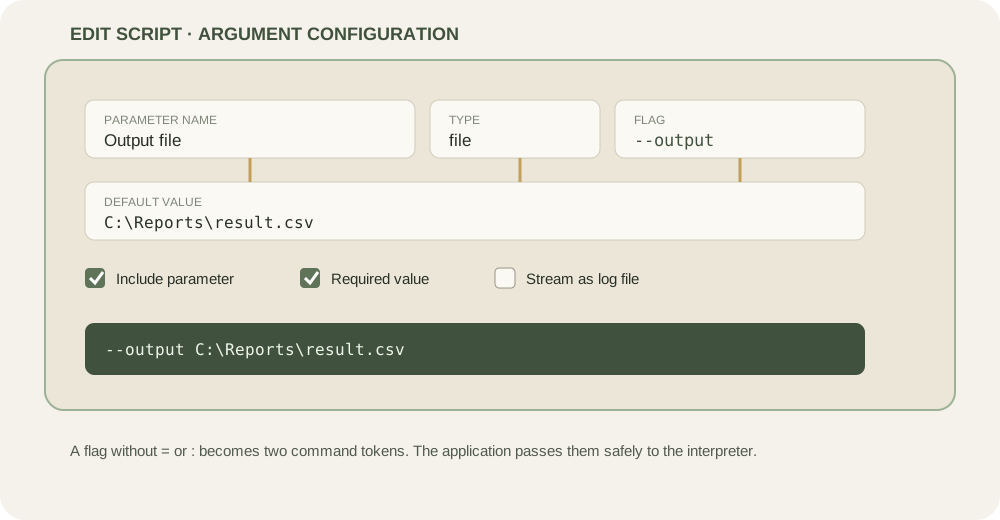
The final character of the Flag field determines whether Script Runner joins the value or passes it as a separate token.
| Flag field | Value | Generated arguments | Use when |
|---|---|---|---|
--output | report.csv | --output report.csv | The parser expects a flag token followed by a value token, typical of Python argparse, Node CLI libraries, and many executables. |
--output= | report.csv | --output=report.csv | The parser expects GNU-style joined syntax with an equals sign. |
/join: | _ | /join:_ | The script expects Windows/VBS-style named arguments joined with a colon. |
| empty | C:\Input | C:\Input | The script reads values by position rather than by name. |
--verbose + Boolean | true | --verbose | The presence of the flag means enabled. When unchecked, nothing is emitted. |
Configure source as folder with --source, limit as number with --limit=, and dry-run as boolean with --dry-run.
Flags without a trailing separator become separate tokens. Boolean WhatIf is omitted when unchecked.
Boolean switches emit only when checked. The join string is attached because its configured flag ends in a colon.
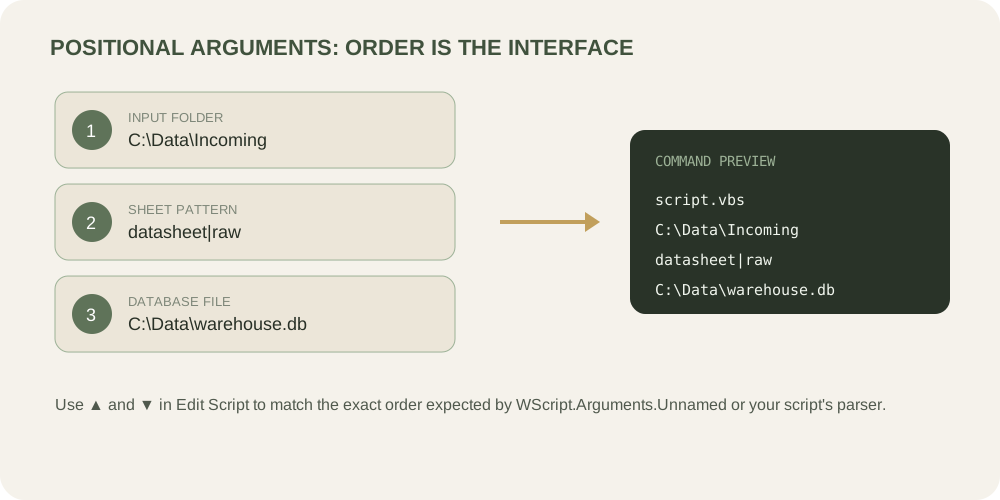
When Flag is empty, values are emitted top to bottom. Use the up and down controls in Edit Script to match the script’s documented argument order.
For VBScript, this commonly maps to WScript.Arguments.Unnamed(0), then Unnamed(1), and so on.
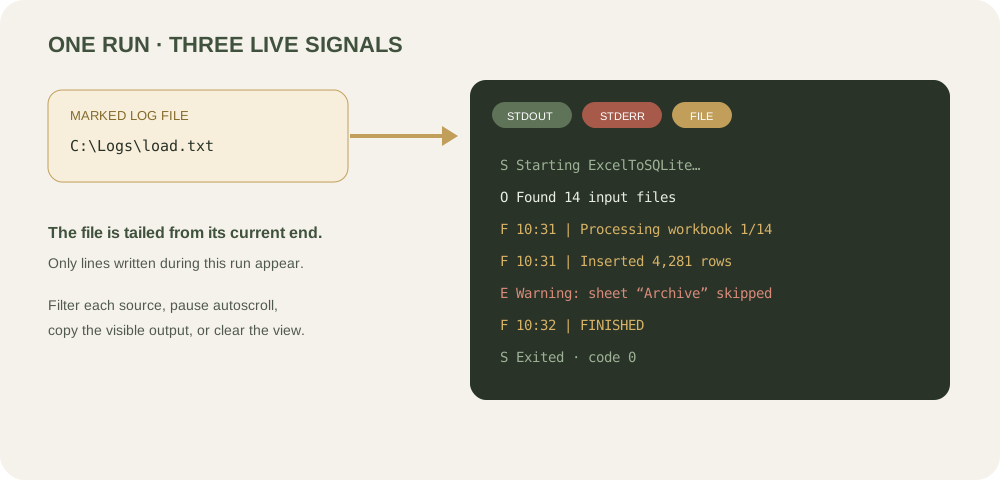
Standard output and standard error are captured directly from the child process. If a file argument is marked Log file, Script Runner also watches it for newly appended text until the run ends.
Existing lines are not replayed—the tail begins at the file’s current end. This keeps each run focused on new activity.
The included v6.1 script demonstrates a mixed interface: nine positional values plus three named switches.
| Order | Name | Suggested type | Flag | Notes |
|---|---|---|---|---|
| 1 | Input folder | Folder | — | Required |
| 2 | Sheet patterns | String | — | Pipe-separated, e.g. datasheet|raw |
| 3 | SQLite database | File | — | Required output database |
| 4 | Final table | String | — | Letters, digits, underscore |
| 5 | Log file | File | — | Mark as Log file |
| 6 | SQLite CLI | File | — | Optional path to sqlite3.exe |
| 7 | Header markers | String | — | Optional pipe-separated list |
| 8 | Mapping workbook | File | — | Required mapping Excel file |
| 9 | Mapping sheet | String | — | Required worksheet name |
| Switch | Multi-row headers | Boolean | /multirow | Emitted only when checked |
| Switch | Test mode | Boolean | /test | No database writes |
| Named value | Join character | String | /join: | Produces e.g. /join:_ |
VBS/VBE use cscript; PowerShell uses powershell; batch files use cmd. ExcelToSQLite v6.1 also requires Microsoft Excel COM automation and is Windows-only.
The Tauri app can be built natively. Python, shell, Node, direct executables, and PowerShell Core can run when their interpreters are installed.
Only run scripts you trust. A configured script executes with the same operating-system permissions as the signed-in user.
The installer contains the Script Runner desktop application. Windows may display an unrecognized-publisher warning because this build is not code-signed.